| Friday, January 7, 2011 |
| Learning to Fly the Co-op |

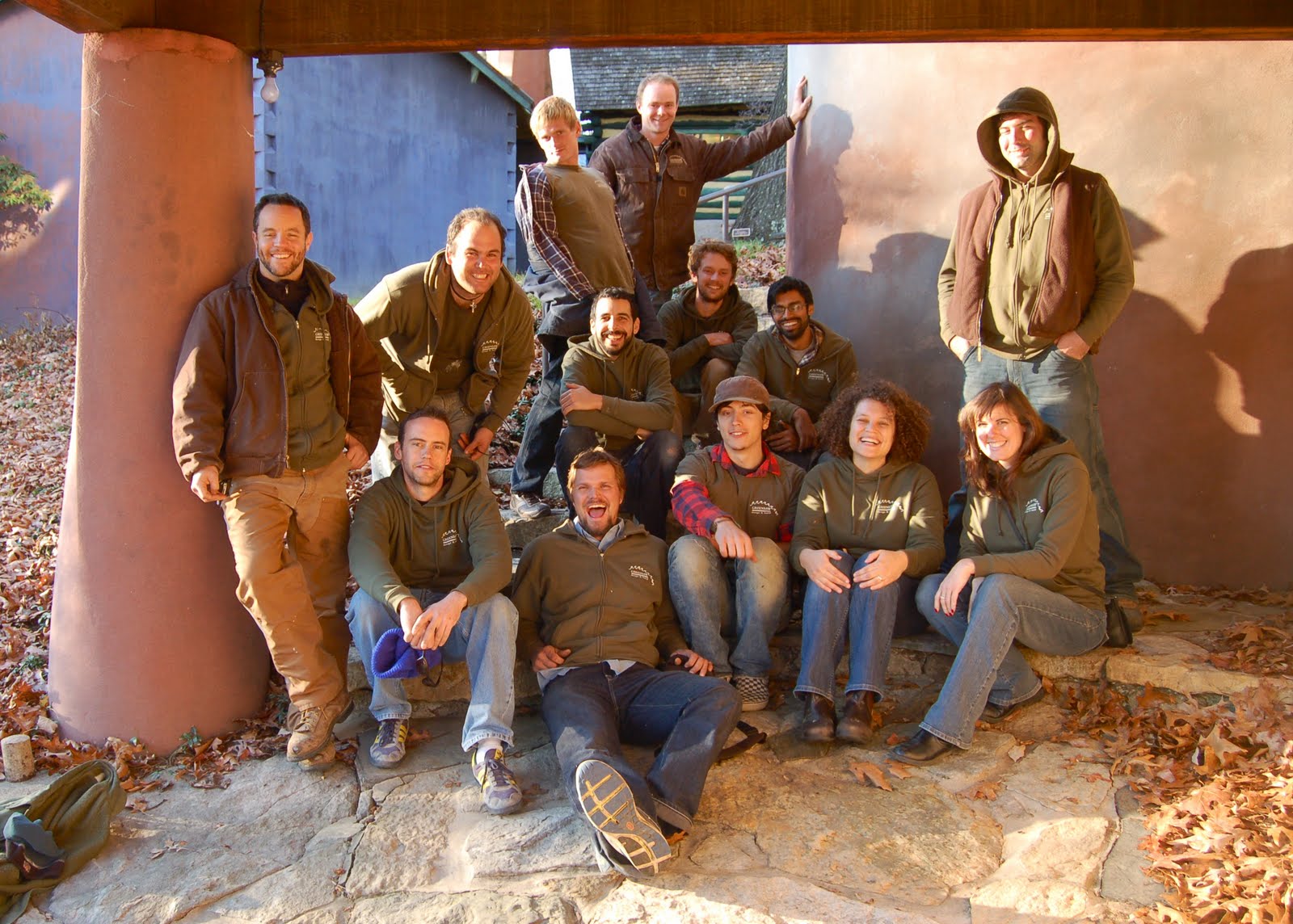
Take my word – you see a person’s true colors in a paintball war – specifically on the Old West course in Jim Thorpe, Pennsylvania. An abandoned movie set of a saloon, bank, forge, and post office provided cover as we Greensaw folks selected our positions. The start gun went off and suddenly we had guys blazing away in the street, some seeking cover, others picking off opponents from the saloon porch, others creeping around the periphery looking for a pot-shot. Not an easy thing, paintball. Especially when your goggles get fogged and you can’t see shit.
Thank the Lord above for folks like John Abrams, Alex Moss, Tedd Benson, and Melissa Hoover. I’m not sure if any of these folks have ever actually picked up a paintball gun. I wonder if paintball is even legal on that exquisite bell-jar of an island, Martha’s Vineyard, where John works. But I have a very good sense of how these leaders might conduct themselves on that Old West course in Jim Thorpe.
We at Greensaw have made the decision to follow in the footsteps of these visionaries, and, with their help and advice, become an employee-owned co-op. At the suggestion of a few, and also to follow in the footsteps of Abrams and Benson, I have committed to recording this process. Let me be clear – I have no aim of writing a book on how co-ops will make the world a better place. For one thing, John has already done this. I simply want to document and honor our process as we embark on this fraught but exciting journey. As Mr. Moss mentioned in an email, it's going to be a "wild ride."
To call ourselves trailblazers would be an overstatement. Perhaps trailblazers in the city of Philadelphia, but hell, we in the 215 haven’t even grasped the concept that citizens don’t pay taxes in order to be harassed daily by a parking authority. Although, with folks like Karen Randall at the Department of Commerce in Philly these things might change (a quick shout-out to her and the remarkable and awesome work she does).
There is a way forward there, and it has been marked, but it’s no stroll on the Wissahickon bridal path. Snow fills footsteps, thread tied to branches is gathered by nesting birds, handwritten notes bleed in the rain. Well that’s not entirely true – Abrams left a long note in the form of his book “The Companies We Keep,” and it has been a hugely helpful signpost, if not an outright bible. So there is a way forward – our goggles are not fogged, just hazy.
We first considered flying the co-op in November 2010. The process began with a question: how in tarnation to recognize the blood Greensaw employees have bled for the company? I mean let’s call it like it is: folks working here could take their skills to South Jersey or California and be making close to twice as much building high-end developments. Or working in an architecture firm. With the skill, professional acumen, and background employees bring and have gained at the company, they could be better-compensated elsewhere.
So what’s holding them back? Or formulated positively, why does a graduate of architecture school in her thirties choose to stay late in the office working on scheduling labor for the months to come? The answer, I don’t think, is a) she’s wants to stay warm (we have one space heater in the office – soon to be corrected with a move to our new offices – so no) b) she doesn’t want to go home (she’s got a great husband who happens to be a project manager at Greensaw and makes a damn good pomegranate martini – so no) c) she takes pride, and believes in what she does.
C, I do believe.
It’s no secret that employees, when they first start, get thrown into the fire just to see what happens. We put ‘em on a bus to New York, give an address for a jobsite and watch it like a spectator sport. Set them to cleaning up the fire set after the Phillies won the pennant. It’s something I learned from Tedd Benson at Bensonwood when they put me in the sawdust room with the chip augur for three days with no lights or windows to fix the motor mount – and don’t come out until you do.
So we have this – commitment to the work at hand. People aren’t playing paintball for just the fun of it. They’re playing because they believe in the larger goal at hand – to win the Wild West.
Second goal of the new model – I wanted to share managerial duties, and allow myself more freedom. To take advantage, for example, of the opportunity to buy a tugboat in Alaska and have the company come west to spread the good word on building with what already exists.

On the one hand, I could have just sold the company. Have it valued independently and either hire a head-hunter, or continue talks with folks who had already expressed interest. We did over a million dollars in gross revenue in 2010. It wouldn’t have been the hardest sell. The problem with that being that anyone buying us would very quickly dilute what has grown to be at best a family, at worst a cult (although cults can get pretty fun in the wee hours of the morn, as any dilly-dallyers at our parties witness).
What about choosing a couple central players, and selling them a share of the company, in return for taking on management?
This model had legs, and we investigated it. Capitalization, internal tensions, separation of site-work from office-work, resentment of me holding on to a percentage of a company I wouldn’t run on a daily basis – these questions made the choice problematic.
Yet the idea of empowering a choice number of individuals revealed an extraordinary truth about the company: not one person who has darkened our doors and made it through the gauntlet of the Greensaw hiring process and three-month review and come out the other side would be ill-suited to making decisions on the future of the company. Meaning that each person we hire gives a damn. Not only about Greensaw, but about how they treat others, the clothes they wear, the food they eat – and the work they do. And the more we thought about it, the more it became clear that this – this is the yeast that makes a co-op rise. Giving a damn about your every move on the face of this fine earth – or stated less crudely, speaking, working, eating, moving, living with intention.
First we looked into ESOPs – Employee Stock Option Plans. An interesting model, where employees own stock in the company where they work. Great idea, members don’t have as much of a voice in government, although different ESOP models work differently (I’m thinking of Carris Reels, essentially an ESOP co-op, on one side of the scale, and Enron on the other - whoops).
Aside from all these concrete reasons why an ESOP might not be the best fit, it also came down to personality. Give me Maine or Alaska, I’ll take Alaska any day of the week. Give me setting up a Christmas tree with a stand for the holiday party, or stringing it up with a come-along across the entrance horizontally – and I’ll choose the come-along. It comes from a muttish family that went on the ill-fated Klondike gold rush, has roots in Oregon and Greenville, South Carolina, suffered the loss of three brothers on the Confederate side in one Civil War battle, fled the pogroms in the Ukraine – and combine that with a kid who grew up roaming up and down city alleys on a Big Wheel reading Rilke’s “Letters to a Young Poet.” At a very young age, “Trust in what is difficult” became an obsession. This mantra has screwed me many times, often in quick succession, but it has never proved a dull.
ESOPs are co-ops Lite. There are a good 12,000 ESOPS across the US – but less than a thousand co-ops. It’s been done before, and it’s cool and all, but not as cool as a co-op.
And I do believe the guys and gals who make up Greensaw have always been up for the challenge in trusting what is difficult, what hasn’t been done. Often to a fault. Don’t take my word for it – come out and play paintball with us, or check out Friday Night Green Fights, or Sunday football. But especially paintball. I started that thought and I’ll end with it – but first I want to record where we are now.
Before the holidays, we formed the Founders’ Committee, whose ordained mission was to investigate and devise a set of bylaws and operating procedures for the co-op (I had just finished the "John Adams" series and visited Jefferson’s Monticello in Virginia. I advocated for us all wearing wigs and talcum powder but people said no – except for Dave, who took it to the next level with mascara).
As is usual with us, we were putting the cart before the horse in order to make the horse uncomfortable with the order of things and get him moving to where he should be.
At that first meeting we began to wrap our heads around the organizational structure of the co-op. Concerns were raised over how much power a management and personnel committee would have over the company. Also over how much individuals would be liable if the company went into debt. We resolved to look into these questions.
Christmas, the New Year. I bought five copies of “The Companies We Keep” and told folks that, like Eric Clapton who wouldn’t speak to anyone not familiar with the Blues of Robert Johnson, I wouldn’t talk to anyone about co-ops who was unfamiliar with the work of John Abrams. I should mention that John Abrams, in his friendly, clear manner, made it evident that he had no interest in discussing co-ops at length with me until I did my homework and read what he had already taken the time to express in his book. Point noted and taken.
We returned following our break and had our first meeting yesterday. Terence Buckley, our financial guru, attended. He made it clear that individuals, unless they committed fraud, would not be liable for company debt. We determined that the board of owners would vote in a management committee – and we would organize ourselves in such a way to guard against cabals.
Heath asked if he had any experience with co-ops. In true Terence fashion, he responded, “No, is that a problem for you motherf—r?” Undoubtedly, this is going to be a Philadelphia co-op, albeit the city’s first, and not a Martha’s Vineyard co-op.
What has been incredible about this process is the interest people have expressed in wrapping their heads around the process. I have come to realize, thanks to the inspired help and guidance of Alex Moss at Praxis Consulting in Chestnut Hill, that the process by which we choose owners should be a spiral one, and not a selective one. In other words, cast a wide net, see who expresses interest, and narrow things down from there. As always, everything depends on team. And a team has the ability to self-select.
I should mention that I spoke with Alex at his offices in Chestnut Hill, and shared lunch with him. He has been kind enough to do work pro-bono in order to help us get on our feet. His deep knowledge, cool head, and devotion to the co-op model is inspiring. To have someone alongside us, his Virgil to our Dante (except we’re not going down into the multiple circles of Hell), is invaluable and hugely appreciated.
And that’s essentially where we are now. We have a meeting scheduled with Jim Steiker on Wednesday to help us wrap our heads around what needs to happen legally for this all to take place. We will need to get the company valued, figure out the cost of membership shares, devise methods of payment both for dividends as well as for the buyout, and sign on to birth the new Greensaw Design & Build Co-op.
So there you are, huddled on the roof of the bank, green blue and pink paintballs whizzing around at 240 feet a second left, right and almost center. You’ve got Melissa, John, Tedd and Alex by your side – the kings and queens of the co-op. How would they play this game?
I’ll tell you how. They would come out blazing. I’m not talking about you cover me or I’ll cover you or let’s coordinate – I’m talking about stepping into the midway Clint Eastwood style and taking folks out. Which, paradoxically, is why the co-op model works so well. It allows these gunners - and that's what they are - the space to shoot from the hip, to be dreamers, to go blazing away and see what sticks.
Or not. The collective makes it clear, as a whole, when the time is for blazing, and when the time is for taking cover and waiting, playing defensively. I never last in paintball. As I wrote in a previous blog, I’ll take a teammates’ gun with the promise to give it back, then I won’t give it back. I’m awful. Abraham Lincoln says that every man can weather adversity, but give him power, and you know what sort of character you’ve got.
Here we are collectively, hunkered down, our hoppers brimming, our goggles clear, our hearts full. We can’t lose.Labels: Architectural salvage, co-op, Coop, green builders |
posted by Brendan Jones @ 10:53 AM   |
|
|
|
| Thursday, June 3, 2010 |
| LEED's Lamentable Lacunae |
In his New York Times Op-ed piece “Don’t LEED Us Astray” (10 May 2010, http://www.nytimes.com/2010/05/20/opinion/20Appelbaum.html) Alec Appelbaum addresses an essential problem of the LEED rating system: it measures the possibility of a building performing in a sustainable manner, instead of the building’s actual performance. This is a valid and understandable complaint. However, there exists an additional lack in the LEED rating system that is much more grave: its myopic focus on new build construction.
On the one hand, the LEED (Leadership in Energy and Environmental Design) is a standard developed by the United States Green Building Council – note the word “building.” Based on a system started in the United Kingdom called BREEAM (BRE Environmental Assessment Method), LEED came into existence in 1998. Today, LEED is the nation’s most recognized rating system for environmental standards.
As Mr. Appelbaum notes, for better or worse, LEED has become the torchbearer for sustainable building. Structures such as 1 Bryant Park aspire to LEED’s highest rating: platinum. While it is unrealistic to believe that all new building will come to a halt, LEED needs to award substantially more points for the reuse of existing building stock, and employment of reclaimed materials in construction.
As it stands now, LEED awards one point – as much as you would get for screwing in a bike rack in front of the building – for using an existing structure. This boggles the mind. I could build a zero energy thermodynamically perfect house, and I’d still be in the red when it came to expenditure of fossil fuels because of the energy it took to create this structure in the first place. Constructing a LEED platinum building uses considerably more fossil fuels than a typical renovation of an existing structure.
Factors that contribute to this are: transportation of waste material; landfill or incinerator use; oil burned to remove structure; residual planetary impact of the waste as it biodegrades. My company, for example, refuses to take on new build jobs, including additions. Instead, we believe in innovative design solutions, and a re-envisioning of space in order to meet a client’s goals for their space.
Recently, we have been in the process of building a LEED Platinum home and commercial space in Philadelpia’s Fishtown area. As it stands, the property is a 6500 square foot shell. However, the brick walls are in fine shape, and most of the joists will continue to do work for years down the line. The previous general contractor on the job refused the job, because he said the building should just be ripped down.
We approach it differently. Our first step in deconstruction will be to salvage all the flooring and set aside the re-usable material for re-use in the finished building. The other material we will re-mill for use elsewhere. The remainder of the deconstruction material will be sorted and portioned out for re-use, with the goal being 100% recycling. Not unlike the goal of the Native Americans to use every part of the animal, instead of just the meat.
In addition, over 90% of our framing material will be coming from struck movie sets in the Philadelphia area. Instead of dumping the used TJIs and dimensional lumber, we have arranged to purchase and clean up the lumber for re-use. All our kitchen and bathroom cabinetry will be fashioned from local reclaimed material – milled up joists, staves from old water towers, siding from local barns.
With these moves, we have taken care of most of the framing, the cabinetry, and a large chunk of the floors – the remainder will be reclaimed from elsewhere. How much does LEED award us? Half a point for each section. We end up with a point and a half – again, half a point more for what we would get with a bike rack out front.
As we speak, in Las Vegas and California, a mini-building boom occurs. Despite extensive tracts of unused and empty housing surrounding cities, builders continue to build new. This is the most egregious example of America’s need to build, build, build. In the same way we are addicted to oil, we are also addicted to creation of new buildings.
LEED needs to present a counterpoint, and award points for it. I would like to take this opportunity to present one: SlowBuild. We have been following the tenets of this philosophy since the inception of our company. Energy and thought are expended on figuring out how best to incorporate existing building stock and material into a finished project. The act of creation engages the design mind, reclaimed material, and the environment. Sustainability, job creation, and a consciousness of the physical surrounding in which the building stands are central goals.
The United States Green Building Council has a great weight on its shoulders. Other rating systems – the Living Building Council, Passive House, Green Globes – carry little weight with the public, or anyone else. While Mr. Applebaum points out a central problem on the energy front, we need to take a step back and look at the larger picture. LEED should be considerably more aggressive in rewarding builders for a thoughtful and considered approach, using existing building stock and reclaimed material at every possible turn.Labels: Architectural salvage, green builders, Green building, Greensaw, LEED, New York Times, reclaim, recycle |
| posted by Brendan Jones @ 6:19 AM |
|
|
|
| Thursday, May 27, 2010 |
| SlowBuild: The Intimate Connections Between Paintball, SEPTA, & Architectural Salvage |

"Straight up the gut."So said the expert paintballer as he refilled his hopper. As we prepared to go into battle, these were his words of wisdom on how to win the field.
The company played last Friday at Skirmish USA, America's largest and most notorious paintball course. Castles, Alamo-styled forts, Old Western ghost towns, demilitarized zones -- myriad options for blowing each other away with pellets the size of gum balls that traveled at 200 feet a second, and often broke skin (Photo to the side, with names appointed by Niko).
Looking at an aerial map of Philadelphia SEPTA (Southeastern Pennsylvania Transportation Authority) routes, or even better driving or biking each morning beside their buses, it becomes apparent that "straight up the gut" constitutes the organization's own philosophy. Philadelphia, its streets laid out by William Penn in a simple grid easy enough for drunk colonists to negotiate (unlike Washington D.C., laid out by the consistently drunk French Major Charles Pierre L'enfant, and completely unnavigable) is ideally situated for executing what seems to be the operating principal of SEPTA: get to end of town to the other as fast as possible. Buses barrel down Second, Seventh, Eighth, Tenth, Lombard, Walnut, Chestnut, etc., moving like motorized battering rams, shredding quarter panels, exploding mirrors, the bike racks on the front of the buses functioning more as truck grills to keep off the errant bikers andoccasional pedestrian. Safest way to avoid the capriciousness of SEPTA is just to ride the damn thing.

I've made a practice of driving to work along Second Street, ordering the dog in the back cab, and picking up passengers. I grant you, there is significant confusion when I lean out the window and make the proposition. While it makes perfect sense -- I'm headed across the city, and have four empty seats -- people, understandably, are wary. It's usually a crowd of three or four, and half will flat-out ignore me. But one rider will throw up his or her hands and say the hell with it, I'll take that ride. Others usually follow, especially when it's raining.
In place of Straight up the gut, the Art of Waiting. Some people do it so gracefully, as if they were born to lean against that brick wall and stare off at a distant gnome. Others can't seem to get comfortable in their own skin, checking and rechecking their black brick of a phone, looking unsure about their socks, the particular contents of the Starbucks cup in their hand.
Of the fifteen or twenty rounds of paintball we played, "Straight up the gut" worked a few times. We split into teams of 8 -- most of us Greensaw folks, a couple others from North Jersey sprinkled about, and one or two self-proclaimed "experts" -- and wrapped blue or red tape around our biceps. On the Alamo course we the Blue Team arranged a sort of blitzkreig, swooping around from either side on of their fort, pinning them down. Reed got a straight shot at four backs, defending against a flank attack.
But for the most part, I would argue the Art of Waiting took the day. In one battle in particular. This one played out in a variation of how I imagine Sherwood Forest, scattered with boulders emerging from the brush like bony knobs on a horse's foreleg, oak and maple trees generously spaced, strategically situated mounds of deadwood scattered among the brush.
The referees placed a flag in the center of the course. The object, they explained, would be to secure the flag, and take it to the opposing team's orange pole. Not unlike recovering a fumble and running it into the opposite endzone.
Well, we decided to take the expert's advide and go straight up the gut. Samir would make a sprint for the flag. Once he secured it, he would fall back, and we would create a horseshoe around him, and shove it down their throats, easily walking the flag across the course.
To move faster, we suggested Samir relinquish his weapon. With understandable reluctance he gave me his gun. The ref counted down, and at the word Go Samir transformed into an Avatar, leaping over deadfalls, balancing one-footed on the crests of boulders, changing direction on a dime, like a running back on a dream run. He snatched the yellow kerchief from the pole, and fell back to us. We encircled him. He found me as I was laying down steady fire to secure our position.
He asked for his gun back. Dear Reader, I am generally a good person. But I so much enjoyed playing Rambo, I did not give it back.
"It'll be cool, I'll cover you man," was the wartime justification I gave.
With a good-humored shrug off went Samir, only to get lit up Platoon-style behind a tangle of branches a couple seconds later. I felt a brief tinge of guilt before taking a couple in the chest from god knows where.
As it happened, the Red Team had taken the tact opposite of straight up the gut. They had decided to wait in the brush, and pick us off as we traveled, like hardwired king salmon, upstream. Anchored by Jason, Heath and Niko, nestled into natural bunkers, they blasted us one by one as we advanced with the flag. Finally, they gathered the yellow kerchief, and walked it across the field, unopposed.
And so it goes, I would argue, with architectural salvage. We are upon the point of completing the most magnificent armoire in the history of the company at the house of Judy Wicks (pictured above, sans center sink, which is to come).
Originally culled from the stocks at Architectural Antiques (www.architecturalantiques.com), the armoire required an enormous amount of waiting in order to complete. Waiting for the correct router bit to imitate the original pediments, waiting patiently with our handcarving knives and Arkansas soapstone for sharpening to get the floret exactly right.
It is the process of SlowBuild: careful, considered movements, in reaction to something done before. Human energy - mindpower, problem-solving, manual dexterity - is expended on material that would otherwise have been incinerated, made to disappear. Instead of shooting across the city, instead of running over all competition with overpowering Tippman paintball guns, we practice the art of waiting. We do not expend fossil fuels while waiting. Rather we practice our chops, or converse on the subject of the intricacies of the job at hand. How can we make this happen? A lot less burning through material, a lot more thought.

And let me be clear here: when we move, when we start shooting, when we start cutting wood, we take no prisoners. We don't need to - careful consideration of the work at hand, multiple iterations of design, checking in constantly with clients - obviate any second thoughts. In fact, we can't afford to. The sublime paradox of salvage is that we give it a second chance, but it doesn't return the favor; if we miss a cut, ain't no going down to the Depot to pick up a replacement.
In a word, straight up the gut doesn't work if the opposition has a gut to go by, a gut they trust -- and a gut that has done a certain amount of sit-ups.
We still have years, miles to go before our education is anywhere near to complete. And yet we know - instinctively - that SlowBuild, and more particularly, building with what already exists, constitutes the future. It is just a matter of time before SEPTA, other contractors, paintball experts, and the rest of the world catches on.
Labels: Architectural salvage, green builders, Green building, Greensaw, Paintball, Philadelphia Carpenters, reclaim, recycle, SEPTA, SlowBuild |
| posted by Brendan Jones @ 5:30 AM |
|
|
|
| Monday, May 17, 2010 |
| What's All This Green-Tech Hype? |
“I know very few environmentalists whose heads aren’t firmly up their ass.” So says Saul Griffith, the subject of the New Yorker article “The Inventor’s Dilemma” (17 May 2010).
Griffith, perhaps one of the foremost green-minded inventors to have sprung from the prodigious loins of M.I.T., has forsaken inventing new technology. Instead, he tinkers with what already exists. This is a concerted step away from what he labels the “green-tech hype,” and a step toward making do with what we have.
I won’t spend any more time dealing with his epiphanic moment – the New Yorker does that well enough. But I would like to touch on a few key points he raises, and examine how they dovetail into our own philosophy of building.
“We’ve been working on energy, as a society, for a few thousand years, and especially for the last two hundred years, so we’ve already turned over most of the stones,” Griffith says. This revolution of thought came after brainstorming floating wind turbines, solar-powered highways, spoke-mounted L.E.D. lights for bicycles, and a machine to made eyeglass lenses cheaply. His basic point is that we ignore, at our peril, the consummation of natural resources and the greenhouse gases created in the process of building.
Instead, Griffith has made a study of Portugal, where houses have thick walls and small windows. I would imagine he would interest himself in a French farmhouse, called a mas, a one-story masonry building oriented to the south, built into a hillside to catch the low-lying winter sun, while avoiding the high sun come the vicious Provençal summer.
As a model for his new thought he looks to the power supply for a telephone from the 1920s. Almost a century old, it still works as it first did, generating enough electricity to throw someone across the room. Ostensibly, it will continue to work for the next five hundred years.
Cell phones, on the other hand, become useless after a finite number of charging cycles. Automobiles, kitchen appliances, computers – they are not built to last. We must figure out exactly what we have at our fingertips, and reclaim it for a current use.
Griffith speaks of his ability to build a “thermodynamically amazing…zero energy” structure. But, he points out, the energy it takes to build this structure would derive from fossil fuels. Even his idea of solar-powered highways, he believes, would not be a “green” move, due to the amount of fossil fuels needed for its construction.
It is from this platform that he addresses the work of Al Gore, who he dubbed the “No. 1 environmental hypocrite.” Gore flies constantly, justifying his carbon footprint by pointing to his effort to spread the word on global warming. Griffith responds, “I don’t think we can buy the argument anymore that you get special dispensation just because what you’re doing is worthwhile.”
It’s a difficult and complicated argument. Or maybe it’s not. Maybe it’s as simple as Griffith calculates. On his website, www.wattzon.com, one can create a pie chart that shows the energy consumed in all aspects of life – driving, flying, and eating. The program calculates this number down to the watt. Griffith’s goal is to live at 2,500 watts. He’s currently at about 8,000.
Griffith’s realization boils down is this: we cannot invent our way out of this problem. Sure, it’s sexier to think we can “discover” a new avenue that will suddenly cut a swath through issues of heating and cooling, the desire to travel, to eat what we want when we want. We are a country built on Benjamin Franklin’s belief that “Necessity is the mother of invention.” Send the kite up to the skies in a thunderstorm, and see what happens….
As a company, we are currently finishing a job at the house of Judy Wicks, founder of the White Dog Café, and the Sustainable Business Network. Wicks has been trailblazer here in Philadelphia, and the world, for local, sustainable practice. We follow in the large footprints she has left.
To build her kitchen, we used the rafters that were deconstructed from her third floor. The cherry countertop comes from a tree in Lancaster that was downed in a lightning storm. The armoire we built for her bedroom is reclaimed from an estate, the material on her deck comes from a New York City water tower, the cedar in the lockers in her yard from a barn in Lancaster.
We are completing a job for the Whitesell’s on Fifth and Spruce in Society Hill. Oak flooring was removed, exposing the original yellow pine beneath. We will use the oak flooring – almost an inch thick – to construct their third floor bathroom.
A LEED Platinum job in Northern Liberties is also getting under way. We will use reclaimed material for the flooring, kitchens, bathrooms, trim, and framing – we get our framing material from struck movie sets.
In my mind, this is what Griffith is talking about: instead of thinking that someone will create a skeleton key to unlock the answer to all our problems, just be a little bit smarter about the materials you work with. Find innovative ways to re-use what already exists, or take a look back to the old-timers to get a sense of how they wrapped their heads around problems of energy.
The answer here lies not only in reclaiming and recycling building material. It also concerns the buildings strategies employed to get you to a finished structure. I’m thinking here of Passive House technology.
Tim McDonald, President and CEO of Onion Flats (www.onionflats.com), is a huge proponent of Passive House, a concept that promotes carbon-neutrality by using passive solar gain and an aggressively sealed and thought-through house. This is directly in line with what we are doing at Greensaw: don’t depend on technology, but rather look to the cards we’re dealt already. The wind blows here, the sun shines here, and it rains every so often. How do we make this work without hugely complicated machinery?
The United States Green Building Council, inventors of LEED, is not especially helpful on this. We can score points in LEED for Homes if we use reclaimed tropical wood, but not local reclaimed wood. Why is this? All our framing material comes from Resource Exchange (www.resourceexchange.org) here in Philadelphia. Resource Exchange is non-profit, re-use company who salvages movie set materials that typically ends up in a dumpster. It is possible that we will score an “innovation” point for this in the LEED charette, but it won’t be a whole lot more.
In addition, you only get one lonely point for building using an existing structure. This strikes me as absurd. The amount of fossil fuel not to mention landfill space that it takes to demo a building and build new should hugely influence the final LEED score.
Now it is one thing for a literature major like me to spout on about reclaimed material, the great stories behind architectural salvage, how much more beautiful it is than new wood and so forth and so on. But when a lifelong inventor and recipient of the 500k MacArthur “genius grant” starts saying that this invention thing ain’t going so hot, maybe we should start figuring out better ways to reclaim and recycle what we already have – well, I, for one, am all ears.Labels: Architectural salvage, green builders, Green building, Greensaw, reclaim, recycle |
| posted by Brendan Jones @ 10:38 AM |
|
|
|
|
| A blog addressing the importance of re-using material, and building with existing structures. A strong emphasis on architectural salvage, as well as the people that make the difficult work possible. |
| About Me |
|
Name: Brendan Jones
Home: Philadelphia, PA, United States
About Me:
See my complete profile
|
| Previous Post |
|
| Archives |
|
|
| Shoutbox |
Greensaw is dedicated to using architectural salvage to enhance modern living spaces. We respect history, our environment, and the material with which we work. We recognize our clients as partners in the process of using old to build new. |
| Links |
|
|
| Powered by |

 |
|